

Masherbrum Expedition – 7,821m




-
Overview
-
Schedules
-
Equipments
-
Included/Excluded
-
Location
Overview:
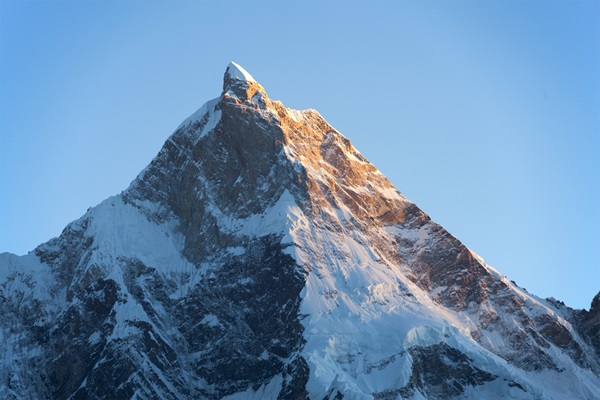
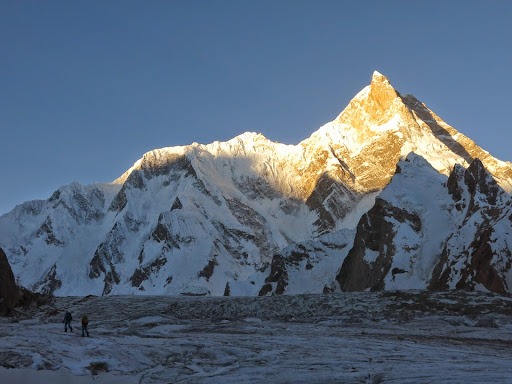
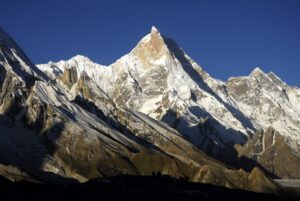
The Masherbrum Expedition is an exciting adventure and an opportunity to climb one of the most severe mountain ranges in the world, the Karakoram. Being the 22nd highest peak in the world and approaching at 7,821 meters height, Masherbrum is one of the most challenging mountains in Pakistan, which allows climbers to face glaciers, steep snowy slopes, endless icy slopes, and rock face pitches in the most deserted part of the Karakoram Range.
This led to the realization that this expedition challenges physical strength, mental endurance, and climbing skills but offers an unparalleled experience in which the sight at the top is breathtaking. For those fonder of climbing high up on the rocks, it can be an authentic and intense experience.
Highlights:
- Summit of Distaghil Sar (7,885 m), one of the highest and least-climbed peaks in the Karakoram.
- Flight or drive from Islamabad to Gilgit with views of Nanga Parbat and the Karakoram Range.
- Trekking through Hispar Glacier with overnight stays at Bitanmal and Base Camp.
- Technical high-altitude climbing with multiple acclimatization camps.
- Wide mountain views including Kanjut Sar, Trivor, and nearby Karakoram peaks.
- Cultural journey through Hunza and Hispar Valley.
- Full expedition experience from Islamabad to the summit and return.
Day 01: Arrive Islamabad 512m
Day 02: Fly to Skardu 2,467m
- - Early morning flight to Skardu
- - Acclimatization day in Skardu
- - Explore local markets and surroundings
- - Overnight stay in Skardu.
Day 03: Skardu
Day 04: Skardu to Hushe 3,000m
Day 05: Hushe to Farbesang
Day 06: Burmbarmma to Masherbrum Base camp
Day 07 to 45: Climbing activities
Day 46: Base camp to Hushe
Day 47: Hushe to Skardu
Day 48: Skardu to Chilas
Day 49: Chilas to Islamabad
Day 50: Islamabad to Flight out
Tour Activities
Services Included
- All airports pick & drops an arrival and departures.
- Air condition transportation for Briefing & De-briefing in alpine club of Pakistan/Ministry tourism.
- Both way domestic flights between Islamabad - Skardu
- Both ways air condition Coaster/mini Bus & Car between Islamabad-Skardu (Optional)
- 4x4 Jeep / Toyotas between Skardu-Hushey.
- Comfortable transportation between Hushe/Kanday-Skardu.
- Transportation for sightseeing.
- Two nights in Islamabad 3*/4* Hotel accommodation with bed & breakfast.
- Two night in Chilas best standard hotel accommodation with full board (Optional)
- Three nights in Skardu best standard hotel accommodation with full board.
- Insurance premium for local staff and porters.
- Experience Guide
- Documentation.
- Visa facilitation letter.
- While ascending any pass above 5000m 15kg in our services.
- Necessary base camp staff (base camp manager, Chief, Cook and assistance & waiters.
- Three meals a day and tea - coffee - snacks during treks and base camp stays.
- Solar panel / generator for light and battery charge at base camp.
- Comfortable foam / mattress while trekking and base camp.
- A Good condition tent provide as individual member at base camp.
- Hot shower and toilet tents.
- Comfortable chairs and table while trekking and base camp stays.
- Complete camping setup with dining and kitchen tents while trekking and base camp.
- Important and local foods during trekking and base camp stay.
- Heating in dining tent at base camp.
- Medical first aid kit for group and staff.
- Walk Talkies for base camp communication.
- All camping and bridge crossing fee.
- CKNP waste management fee and Gondogoro la rescue fee.
- Assistance for international tickets reconfirmation.
- Farewell dinner will served in Skardu / Islamabad.
Services Not Included
- Member international flight tickets.
- Members any climbing / trekking Gears.
- Sleeping bag and all personal expenses such as telephone call, fax, email charges, liquor Or soft drinks.
- Room service, gratuities for personal service, items of a purely personal nature.
- Staff tips, we recommended you to give small bonus for our local staff.
- Mini bars while staying in hotels / travelling.
- Member personal insurance.
- Custom clearing charges, (import and export of equipment).
Equipment List
- -20F DOWN SLEEPING BAG: A (-20 sleeping bag) required and should be include correct sized compression stuff.
- -40 DOWN SLEEPING BAG: A (-40 sleeping bag should be require as synthetic large light weights designs. A good product recommended.
- HEAVY BASE LAYER BOTTOMS: Heavy, expedition-weight base layer bottom designed to be used while climbing in very cold conditions.
- SOFT PANTS: Soft shell pant should be non-insulated, stretchy comfortable, without base layer from top to bottoms recommended. Zip off pants consider and recommended.
- DOWN PANTS: A weatherproof down pants should be fit and good fabric.
- SOFT JACKET: We recommend you to bring a wind - weather resistant Jacket, the layer should be fit from mid layer to base top.
- DOWN JACKET: Due to insufficient sweater protection we recommend you to bring an insulated high quality down jacket ,size fit and 1.5 weight suitable
- RAIN JACKET: A fully waterproof jacket recommend, two to three layer fabric are common, Goretex fabric will be nice in order to protect from heavy raining.
- HARD PANTS: A water proof shell pant size should be fit and comfortable from bottoms base layer and soft consider.
- DOWN SUIT: Down suit is common in order to use beyond base camp.
- SYNTHETIC PANTS: A synthetic insulated pant with full-length separating side zip.
EXPEDITION CLOTHING AS FOLLOWS:
- EXPEDITION MITTEN: Expedition-rated mittens with an insulated removable liner please be sure this mitten is the warmest model available by any manufacturer.
- INSULATED SHELLGLOVES: A good leather warm gloves with insulated removable liners recommended which shell be useful when the altitude conditions clod.
- LIGHT WEIGHT LINER GLOVES: A lightweight synthetic liner Glover requires, size should be comfortable and fit. Color gray and dark recommended.
HEAD WEAR AS FOLLOWS:
- HEAD LAMP: A modern outdoor LED headlamp offering 200-300 lumens of output. Freshly installed batteries plus spare batteries. Weather-resistant models are strongly preferred.
- NOSE GUARD: Nose guard useful while trekking to base camp and beyond.
- SKI GOGGLES: High quality goggles for sun and wind protection at altitude. The lens should offer visible light transmission (VLT) of no more than 30% those with light-sensitive eyes may wish to use a darker lens.
- GLASSES: High quality glacier glasses offering full coverage around both eyes and across the nose.
- FACE MASK: Best standard models face-mask recommended the size should be cover your face.
- WOOL/SYNTHETIC SKI HAT: A non-cotton wool or synthetic hat that covers the head and ears comfortably.
- BALACLAVA: One or two good quality lightweight balaclava require layer should be in place.
- BUFF: A must- have for all outdoor activities, the UV buff is a versatile replacement for the bandanna and services a multitude of purposes.
- SUN HAT: Modern style of lightweight hat for shading the head will work well, like baseball sun hats are common.
- CLIMBING HELMET: A lightweight climbing-specific helmet should be fit and comfortable over your bare head.
- PEE BOTTLE (1-1.5 LITER): Wide mouth pee bottle use for overnight.
- WATER BOTTLE PARKAS: Bring two fully insulated water bottles parkas with zippered openings. Neoprene `coxy` style constructions do not provide enough insulation and are not recommended.
- PEE FUNNEL (FOR WOMEN): Practise of critical for the use of this item.
- KNIFE: A knife should be light, simple and medium sized recommended.
- WATER BOTTLES: One litter capacity water should be white mouth made of co-polyester (BPA free plastic). No water bag and bladder system (they freeze or are hard to fill) and no mental bottles (they have a tendency to freeze).
- THERMOS: A fully vacuum-insulated thermos liter sized is recommended for hydration, comfort and safety on cold days on the mountain.
- LIPS LOSE: Several tubes of SPF 30+lips lose.As with sunscreen.
- SUNS CREAM: One to two ounces of SPF 30+ sunscreen. Varieties wit zinc-oxide are more protective! One ounce is typically sufficient per week but several small tubes can offer insurance against lost or exploded tubes. Sunscreen loses SPF rating over time; we strongly recommended.
- TRASH COMPACTOR/CONTRACTOR BAGS: Three heavy plastic garbage bag for use as waterproof pack/stuff sack liners. Trash compactor or contractor bags are made from a heavier plastic and stand up well to prolonged mountain use. Alternatively, a reusable waterproof pack liner can be use provided it completely fills the inside of your pack.
- TOILETRY BAG: Include toilet paper (stored in a plastic bag), hand sanitizer, toothbrush, toothpaste, floss, and wet wipes. Choose a quantity appropriate for the length of your trip, and call the Gear Department with any question about these items.
- CAMERA ACCESSORIES: Small point-and-shoot cameras (including compact SLR`s are ideal and work well at altitude. Alternatively, many opt to use a smartphone/ Iphone camera. Due to weight & care in the mountain environment, large DSLR cameras are discouraged.
- LARGE DUFFEL BAGS: Two (2) large duffel bag should be used for transporting all gear to base camp. Soft-sided, water-resistant duffel are required.
- RUNNING SHOES: Lightweight, comfortable running or walking shoes are recommended for off-mountain use and pre-and-post trip travel. In some situation these may also serve as approach shoes.
- HAND AND TOE WARMERS: Bring three sets of each. Please note that toe warmers are different than hand warms. They are formulated to work in a lower oxygen environment, like the inside of a boot; they also burn out more quickly.
- BOWL: Two-cup capacity pack-able bowl required while climbing beyond the base camp. A good quality bowl and plate recommended.
- WATER MUG: Your mug should retain heat well and be spill resistant. Insulated outdoor-style mug with a removable lid recommended.
- SPOON: Durable hard plastic or metal spoon requires while your stays at the mountain climbing. Longer spoon stems can be helpful for eating while wearing gloves.
- INFLATABLE SLEEPING PAD: Lengthy sleeping pad recommended, would be better if you can bring valve repair patch kit.
- 55-LITER CLIMBING BAG: Also 55-60 litters capacity climbing bag require. Simple, light and should be attached point for crampon and Ice axes.
- SMALL BAG PACK: At least 30 liters carrying capacity lightweight small bag pack require.
- TREKKING PANTS: Synthetic fabric trekking pants should be lightweight, 2 pair with zip off models preferred for some.
- BASE LAYER _ TOP & BOTTOM: We recommended you to bring at least 2-3 pair of lightweight base layer, pants, shirts.
- ICE AXE: We recommended you to bring a general mountaineering ice axe, too short is preferable, make sure the design should be technical ice climbing.
- CRAMPONS: General mountaineering crampons, we recommended modern still 12-point crampons with anti-balling plates.
- CARABINERS: Looking and non-looking carabineers pairs need while ascending and descending mountain climbing.
- CLIMBING HARNESS: A good quality harness should be fit over your clothing, adjustable leg loops and waist belt should be contain, feature gear loops recommended.
- BELAY DEVICE: Modern tube-style belay device. Avoid super-specialized belay device which cannot accept wide variety of rope diameters.
- TREKKING POLES: Trekking poles while trekking to mountain range.
- ASCENDER: One right or left-handed ascender (pick your dominant hand to choose which style ascender). This item must be in good condition.
Mountain Travel Essentials
Prepare for your mountain adventure with these essential tips to ensure a safe and enjoyable experience:
Essential Gear
- Layered clothing for temperature changes
- Waterproof jacket and pants
- Sturdy hiking boots with ankle support
- UV-protective sunglasses
- Headlamp with spare batteries
Health & Safety
- Acclimatize properly to avoid altitude sickness
- Use high SPF sunscreen even on cloudy days
- Stay hydrated with 3-4 liters of water daily
- Carry a basic first-aid kit
- Inform others of your route plan
Mountain Activities You'll Enjoy
Mountain environments offer unique experiences you won't find anywhere else. During your journey, you may have the opportunity to enjoy:
Alpine Photography
Capture breathtaking vistas, unique flora, and dramatic light conditions that make mountains a photographer's paradise.
Wilderness Camping
Experience nights under crystal-clear skies with unparalleled stargazing opportunities in pristine mountain environments.
Wildlife Encounters
Observe native species in their natural habitats, from majestic birds of prey to elusive mountain mammals.
Cultural Immersion
Connect with local mountain communities and learn about their unique traditions, cuisine, and way of life.
Masherbrum
About This Location
Masherbrum, standing at 7,821 meters, is located in the Karakoram Range of Gilgit-Baltistan, Pakistan, within the heart of the Hushe Valley in the Ghanche District. The region is known for its dramatic landscapes, towering granite walls, massive glaciers, and remote alpine terrain. Hushe village serves as the last settlement and the primary gateway to Masherbrum Base Camp. From here, the route follows rugged trails, glacial moraines, and high mountain passes surrounded by some of the world’s most iconic peaks. The area is peaceful, culturally rich, and offers a true high-altitude wilderness experience for climbers seeking a challenging and rewarding expedition.
Weather Conditions
Masherbrum (7,821m) sits deep in the Karakoram range, where weather conditions can change quickly and dramatically. During the climbing season, daytime temperatures in the lower valleys remain mild, but nights turn cold. As you move toward the higher camps, temperatures often drop well below freezing. Strong afternoon winds, occasional storms, and sudden whiteouts are common at high altitude. Clear-weather windows are very important for a safe summit push, as snowfall and rapid weather changes can affect progress on the mountain.
Best Time to Visit
The ideal time for the Masherbrum Expedition is late June to mid-September. This period offers relatively stable weather in the Karakoram, making glacier travel and high-camp rotations more manageable. July and August are considered the prime climbing months, with better visibility and milder temperatures at higher altitudes. Early season (late June) and late season (early September) are quieter but slightly colder and more unpredictable, suitable mainly for experienced climbers and well-prepared teams.
Nearby Attractions
- 1. Hushe Valley
- A beautiful and culturally rich valley surrounded by towering peaks. It is the last inhabited village before the expedition route begins and offers warm hospitality, traditional Balti culture, and scenic landscapes.
- 2. Gondogoro La Pass
- One of Karakoram’s most famous high passes, offering panoramic views of K2, Broad Peak, Gasherbrum peaks, and the surrounding glaciers. Many trekkers visit this region for its stunning vistas.
- 3. Charakusa Valley
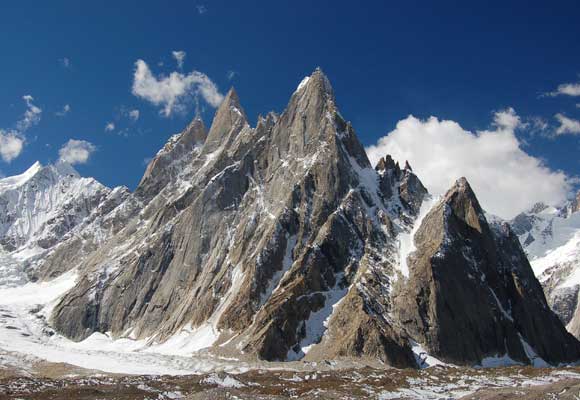
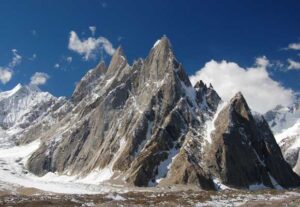
- A world-renowned climbing destination featuring spectacular granite spires, rock walls, and untouched alpine scenery. It attracts rock climbers and mountaineers from around the world.
- 4. Mashabrum Glacier
- A massive glacier system that flows from the slopes of Masherbrum. Its rugged ice formations and remote setting make it a striking feature of the region.
- 5. K6 & K7 Base Camps
- Close to the Hushe region, these base camps provide incredible views of two iconic peaks — popular among trekkers and climbers exploring the Karakoram.
- 6. Shyok River
- A dramatic river running through narrow gorges and open valleys, offering peaceful viewpoints and photography spots along the route.